(Exhibition from 28 March to 30 April 2026)
What we see of ourselves is often the shadow cast by light and experience. Our sense of self often reveals through the "shadows" shaped by lived experience and social structures, while the essence of our being remains difficult to perceive directly. Just as "The Stars Are Not Afraid to Appear Like Fireflies," the nature of existence does not depend on being accurately identified; it unfolds through continual emergence and appearance.
With this in mind, the exhibition space incorporates reflective black glass, refracting the images of both the environment and the visitors themselves. Together with red light bulbs, the space renders an abstract labyrinth in which "seeing" and "being seen" intertwine. The glass adopted echoes with the transparency of the floor to ceiling windows and resonates with the visual characteristics of Hong Kong's urban architecture. Through the reflections and overlaps in the Foundation Gallery, visitors may come to aware of their own presence and are prompted to reflect on the relationship between visibility and invisibility, between the individual and the environment.
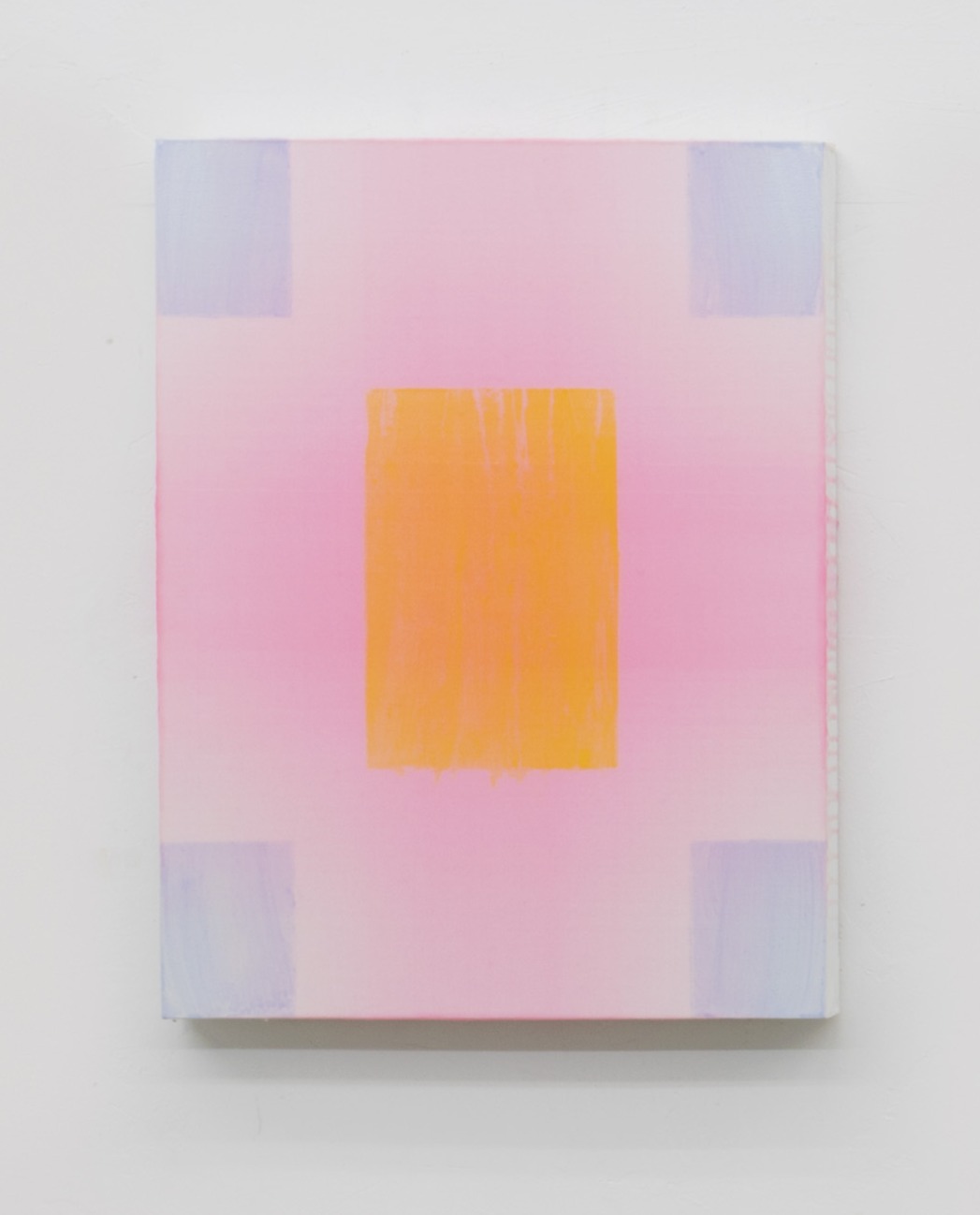
Reflection of Shadow represents a central strand of the artist's exploration of "appearing and the concealing". Through repeated outlining and forming structured image, light is no longer merely an external condition that illuminates objects; it becomes the very process through which "shadows" are continuously generated. Within dense layers and meticulous variations, the images present a state between certainty and dissolution, keeping perception suspended in an unfinished state. The imagery seems simultaneously forming and fading—like the reflection of a shadow—always pointing towards an existence that cannot be fully confirmed.
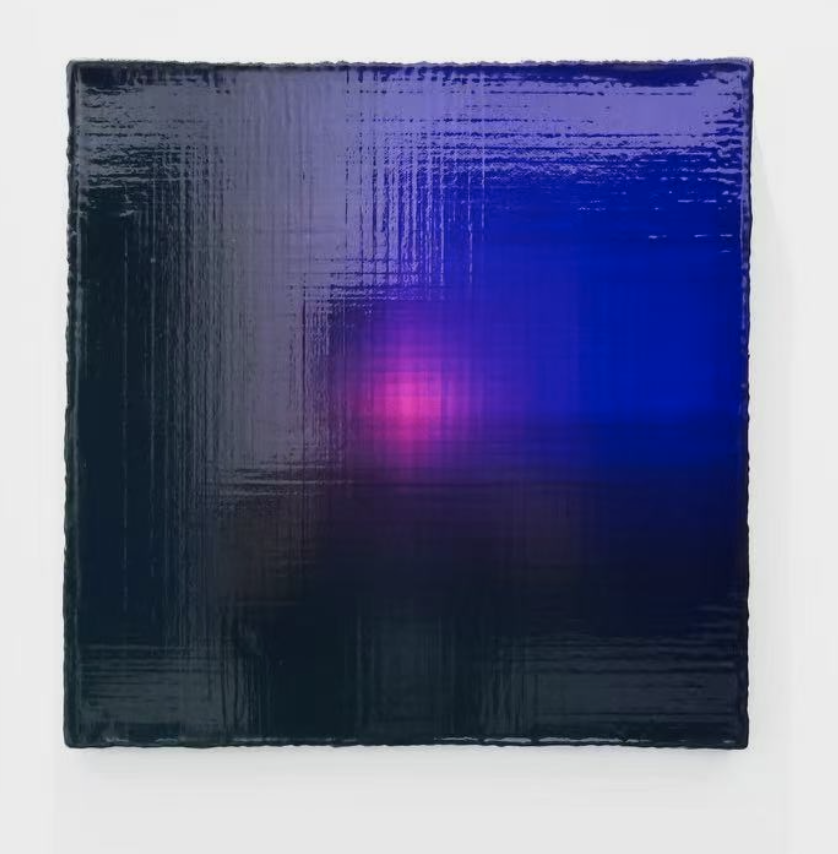
The new work Ksana extends this inquiry into the temporality of appearance. It responds to the fleeting yet intense sense of light of Hong Kong through highly compressed visual energy, rendering the image like a brief trace of brightness emerging in darkness. The artist uses industrial aluminum panels as the painting surface and applies hundreds of layers of pigment using a glazing technique inspired by the ceramic glazes in the Southern Song Dynasty. Through repeated application and erasure of translucent layers, the image continually drifts away from its initial form, maintaining a delicate balance between emergence and disappearance. Here, light is no longer stable; it becomes an event—momentarily appearing and swiftly vanishing.
Echoing with the reflective structures in the space, these paintings remind visitors that what we see may be only an ever forming "surface", while true existence—like the light source itself—remains in a place that cannot be directly seen.